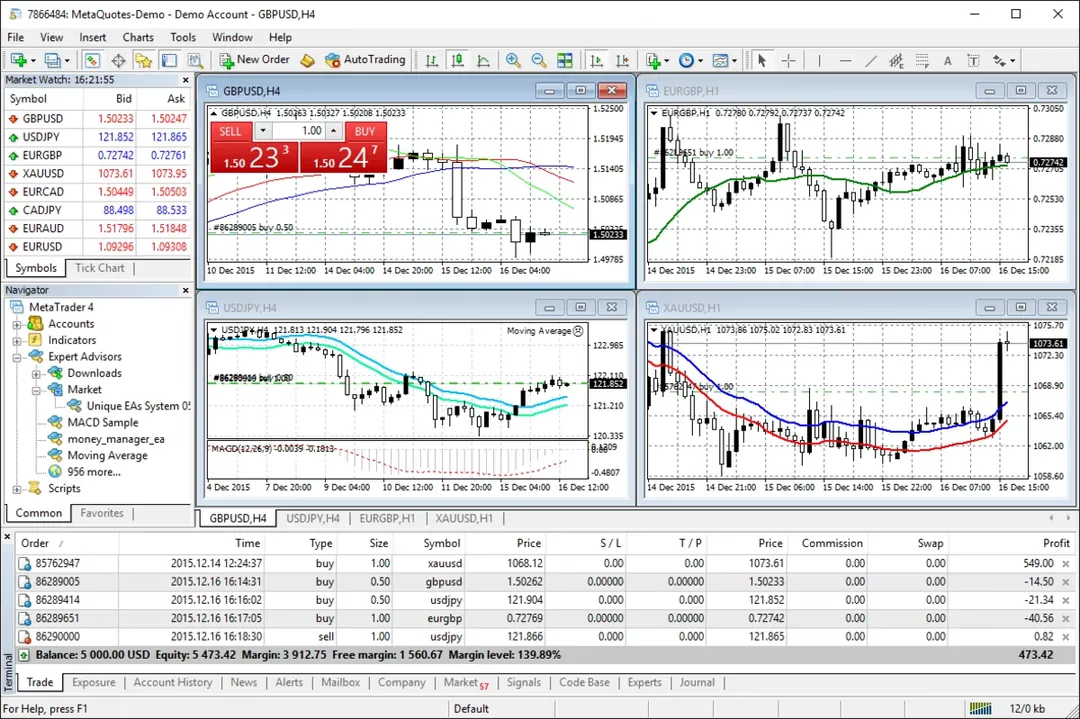
Why traders still pick MT4 over newer platforms
MetaQuotes stopped issuing new MT4 licences a while back, nudging brokers toward MT5. Yet most retail forex traders stayed put. The reason is not complicated: MT4 has twenty years of muscle memory behind it. More than a decade's worth of custom indicators, Expert Advisors, and community scripts only work with MT4. Moving to MT5 means rewriting that entire library, and few people can't justify the effort.
I've tested both platforms side by side, and the differences are smaller than you'd expect. MT5 adds a few extras such as more timeframes and a built-in economic calendar, but the core charting is very similar. Unless you need MT5-specific features, there's no compelling reason to switch.
Getting MT4 configured properly the first time
The install process is quick. The part that trips people up is getting everything configured correctly. Out of the box, MT4 opens with four charts squeezed onto a single workspace. Clear the lot and open just the markets you care about.
Templates are worth setting up early. Build your go-to indicators once, then right-click and save as template. From there you can load it onto other charts without redoing the work. Minor detail, but over time it adds up.
A quick tweak that helps: open Tools > Options > Charts and enable "Show ask line." By default MT4 displays the bid price by default, which makes buy entries seem misaligned by the spread amount.
Backtesting on MT4: what the results actually mean
MT4 comes with a backtester that gives you the ability to run Expert Advisors against historical data. Worth noting though: the accuracy of those results hinges on your tick data. The default history data is interpolated, meaning it fills in missing ticks using algorithms. If you're testing something more precise than a quick look, grab third-party tick data.
The "modelling quality" percentage tells you more than the metatrader 4 brokers bottom-line PnL. Below 90% means the results aren't trustworthy. People occasionally share screenshots with 25% modelling quality and wonder why their live results don't match.
Backtesting is where MT4 earns its reputation, but only if you feed it decent data.
MT4 indicators beyond the defaults
MT4 ships with 30 default technical indicators. Most traders never touch them all. However the platform's actual strength comes from user-built indicators built with MQL4. There are thousands available, spanning simple moving average variations to elaborate signal panels.
Installing them is straightforward: place the .ex4 or .mq4 file into the MQL4/Indicators folder, refresh MT4, and you'll find it in the Navigator panel. One thing to watch is reliability. Community indicators are hit-and-miss. A few are genuinely useful. Some stopped working years ago and may crash your terminal.
When adding third-party indicators, check how recently it was maintained and whether other traders report issues. A poorly written indicator won't just give wrong signals — it can slow down MT4.
Risk management settings most MT4 traders ignore
You'll find some risk management options that most traders skip over. First worth mentioning is the maximum deviation setting in the trade execution window. This defines how much slippage is acceptable on market orders. Leave it at zero and you're accepting whatever price the broker gives you.
Everyone knows about stop losses, but MT4's trailing stop feature are overlooked. Right-click an open trade, pick Trailing Stop, and set a distance. The stop adjusts automatically as price moves in your favour. Doesn't work well in choppy markets, but if you're riding trends it reduces the need to stare at the screen.
None of this is complicated to set up and they remove a lot of the emotional decision-making.
Expert Advisors — before you trust a robot with your money
EAs sounds appealing: define your rules and let the machine execute. In practice, a huge percentage of them lose money over any meaningful time period. Those marketed using flawless equity curves tend to be curve-fitted — they worked on historical data and fall apart the moment conditions shift.
This isn't to say all EAs are worthless. Certain traders build custom EAs to handle well-defined entry rules: entering at a specific time, managing position sizing, or exiting positions at fixed levels. These smaller, focused scripts are more reliable because they execute defined operations without needing interpretation.
If you're evaluating EAs, test on demo first for at least several weeks in different conditions. Running it forward in real time reveals more than backtesting alone.
MT4 beyond the desktop
MT4 is a Windows application at heart. Running it on Mac face friction. The traditional approach was running it through Wine, which did the job but had display glitches and the odd crash. A few brokers now offer macOS versions built on Crossover or similar wrappers, which are better but still aren't built from scratch for Mac.
MT4 mobile, on both iOS and Android, are surprisingly capable for keeping an eye on your account and making quick adjustments. Doing proper analysis on a mobile device isn't realistic, but adjusting a stop loss on the go is genuinely handy.
Check whether your broker offers a native Mac build or just a wrapper — the difference in stability is noticeable.